
Cultivating the Perfect Environment: How NHR's IoT Technology RH Sensor is Revolutionizing Taiwan's Orchid Farming Industry
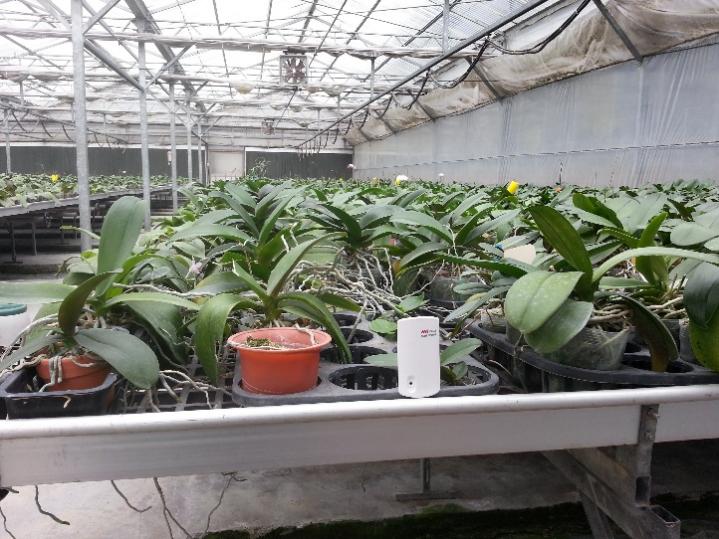
Taiwan is a world-renowned hub for orchid farming, with over 15,000 orchid-growing businesses and over 3,000 different species of orchids. The country produces around 100 million potted orchids every year, valued at over USD $160 million. Orchid farmers in Taiwan are constantly striving to improve their cultivation techniques in order to optimize the growing environment for these delicate plants. With the help of NHR's IoT technology RH Sensor, farmers are now able to achieve more precise and efficient orchid cultivation, leading to better yields and higher quality products.
One of the major challenges in orchid cultivation is maintaining optimal humidity levels. Orchids require specific humidity levels to grow and thrive, and even small fluctuations can cause damage to the plants. Traditional methods of monitoring humidity levels involved manual checks using handheld devices or visual inspections. These methods are often time-consuming and can result in inaccuracies due to human error. With NHR's IoT technology RH Sensor, farmers can now remotely monitor humidity levels in real-time and receive alerts when levels deviate from the optimal range.
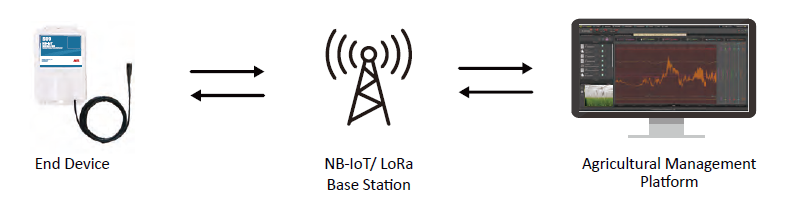
The RH sensor is lightweight and easy to install, requiring only NB-IoT or LoRa connection and a power source. Once installed, the sensor continuously collects data and transmits it to NHR's SentrolCloud Platform, where it is analyzed and displayed on a user-friendly dashboard. The dashboard allows farmers to monitor humidity levels over time, identify trends and patterns, and make informed decisions about crop management. This level of precision ensures that farmers can maintain the optimal environment for their orchids, leading to stronger plants, lower disease rates, and better yields.
NHR's IoT technology RH Sensor has also enabled farmers to reduce their water consumption and optimize irrigation systems. By monitoring humidity levels in real-time, farmers can make more informed decisions about when to water their plants and how much water to use. This not only saves water but also reduces labor costs associated with manual irrigation. Moreover, NHR's sensors have also helped to reduce energy and fertilizer consumption. As farmers can monitor their orchids' environment in real-time, they can adjust their heating, ventilation, and air conditioning settings to provide the perfect growing conditions for orchids, leading to a reduction in energy used. And with NHR's sensors, farmers can also optimize their use of fertilizers, only using the amount that is necessary to grow healthy and strong orchids.
In conclusion, NHR's RH Sensor helps Taiwan's orchid farming industry by providing farmers with precise and efficient monitoring of humidity levels. Farmers are now able to optimize orchid growing conditions, leading to higher quality orchids, reduced water and energy consumption, and lower disease rates. With the help of this technology, Taiwan's orchid farmers can continue to uphold their reputation as some of the world's best orchid growers.
Back to Case Study
 Nietzsche Enterprise Co., Ltd.


Copyright © 2024-2026 Nietzsche Enterprise Co., Ltd. All rights reserved.